Engineering case study
Windows C#
Windows Shared Module Validation
Reorganizing shared Windows and C# functionality into reusable modules, with desktop interfaces used to validate integration and interaction flows.
- Platform
- Windows C#
- Project period
- 2024.09–Present
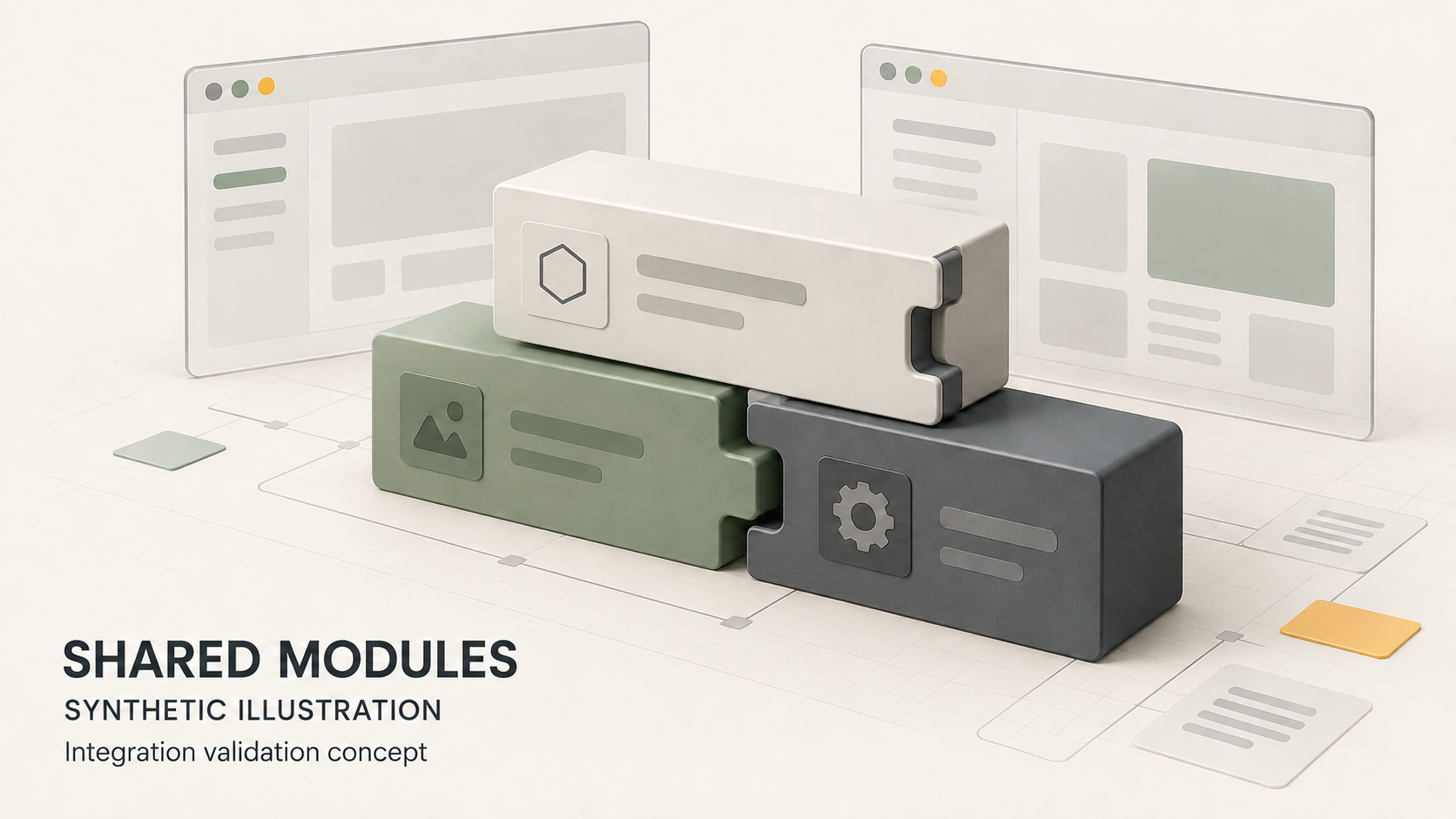
Synthetic illustration of reusable blocks and desktop windows representing shared-module integration validation.
Product Context
Project context
This is ongoing work to validate reusable Windows and C# modules. The team reorganizes shared functionality from existing projects and uses desktop interfaces to check integration and redesigned interaction flows. It is not a standalone released product. The earliest verified personal contribution in the repository dates to September 2024; that is not the project's formal start date.
Constraints
Problem & constraints
Shared functionality needs consistent integration across desktop interfaces and libraries while remaining compatible with existing .NET Framework 4.8 Windows projects. Some modules connect to operating-system capabilities or external services, so the public account keeps those mechanisms abstract and omits internal authentication flows and real settings.
Responsibilities
My role & implementation
I was a main developer for module design, implementation, integration testing, and troubleshooting. Some features were completed with teammates, and some were extracted and reorganized from existing projects. Version history supports my work on desktop UI flows, reusable localized WinForms components, shared authentication integration, Windows settings interfaces, data transfer, and event logging utilities.
Technical Approach
Technical approach
Separate desktop interfaces exercise shared libraries, keeping presentation, reusable behavior, and Windows capabilities in distinct layers. Integration work starts by checking dependencies between each application entry point and its shared modules, then addresses interface behavior, compatibility, and diagnostic information. Security settings and external services are described only at a high level.
Outcome & Evidence
Outcome & evidence
Repository history and source code trace the implementation and later fixes for reusable components, localized UI, module integration, Windows settings pages, and event logging utilities. These are verified engineering outputs. There are no publishable, verified quantitative metrics, user outcomes, or business outcomes, and no confirmed formal release responsibility.
Media
Media & gallery
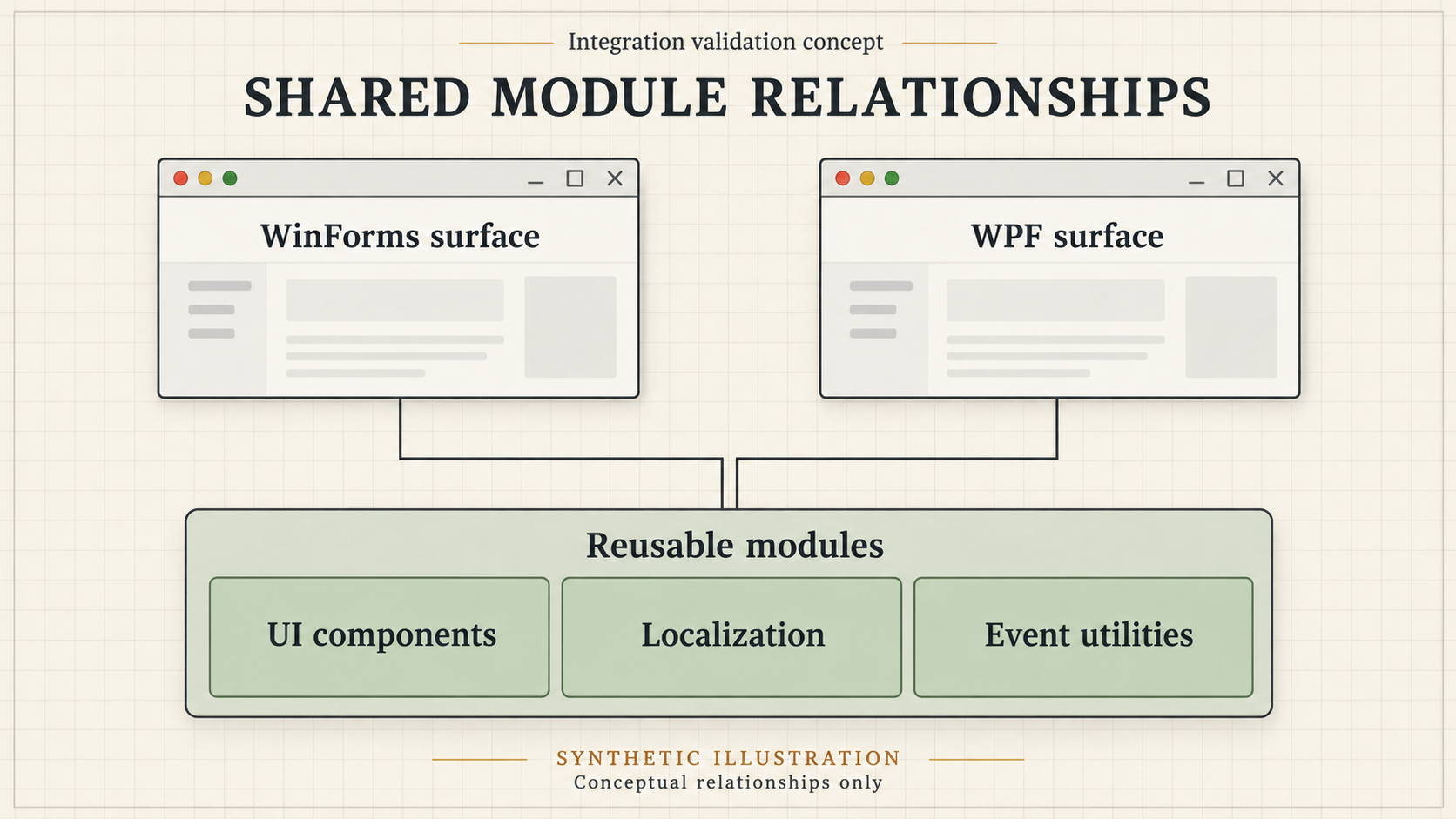
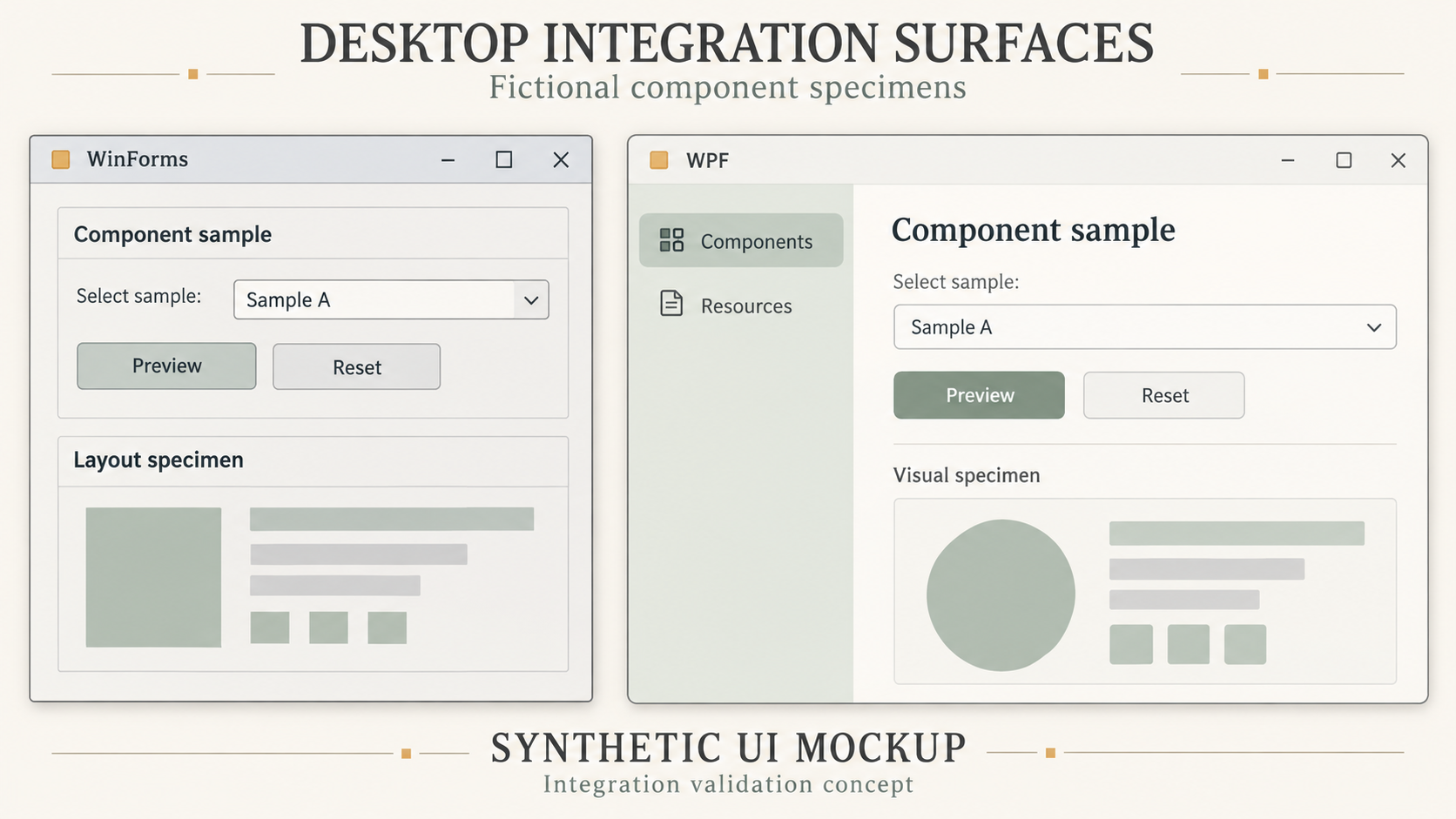
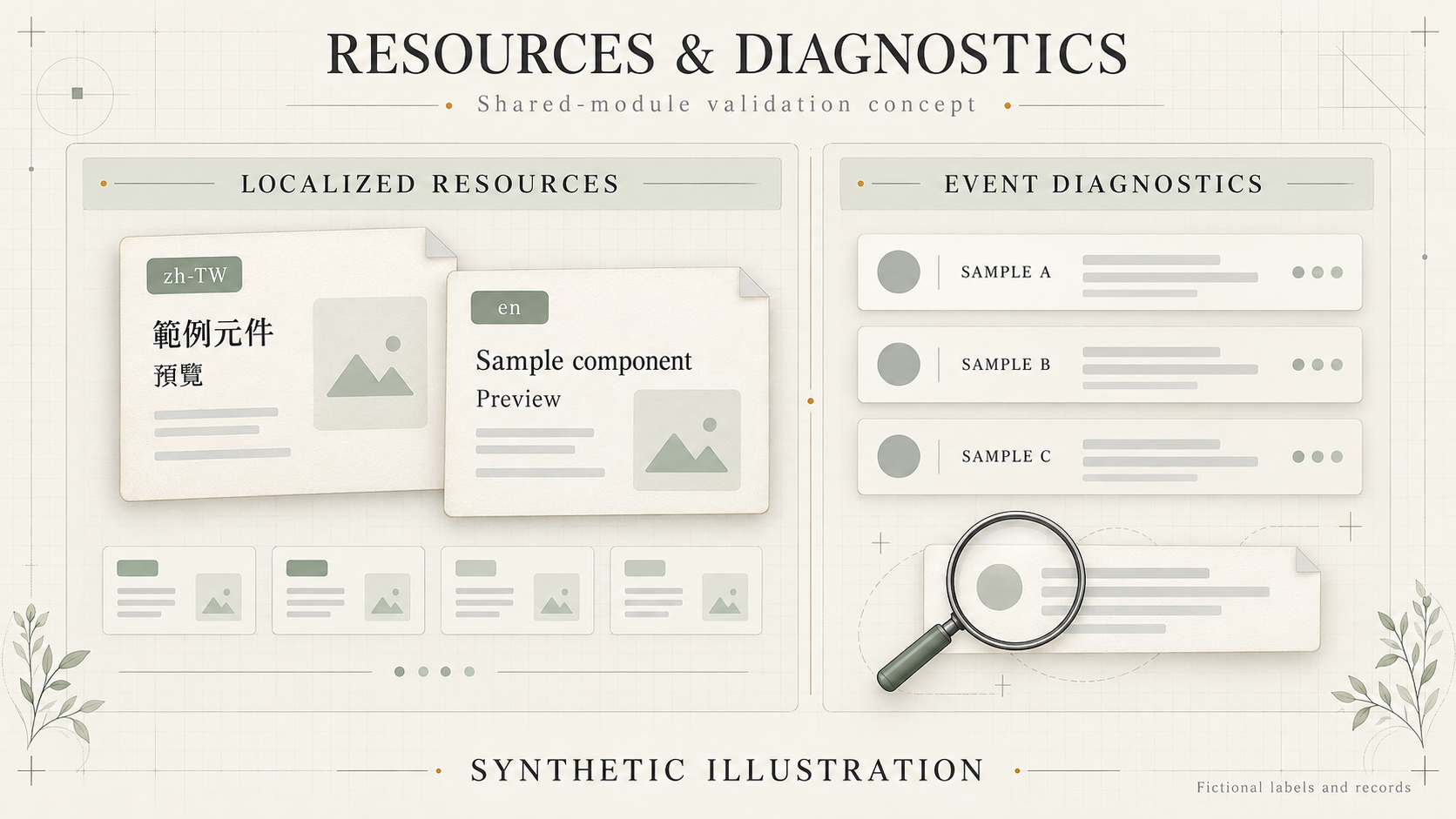
This page includes an abstract shared-module cover and three independent synthetic illustrations of module relationships, WinForms/WPF surfaces, and localization with event diagnostics. All interfaces, labels, and records are fictional, and every image is marked as synthetic. The relationship diagram is conceptual and does not reproduce the full internal architecture. These assets explain module integration validation; they are not actual product screenshots, a released product, test-pass records, or evidence of personal contribution or outcomes. Real security settings, authentication flows, and network or service configuration are omitted. The text and synthetic illustrations have been approved for public use.
Technology
Technology tags
- C#
- .NET Framework 4.8
- Windows
- WinForms
- WPF
- Shared libraries